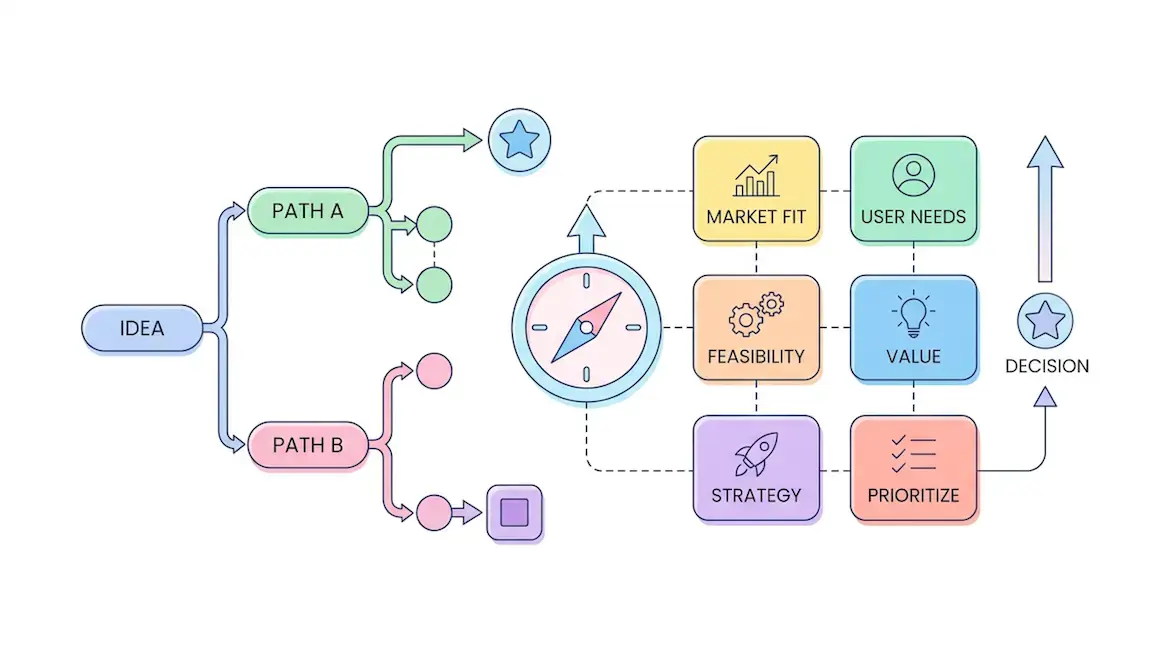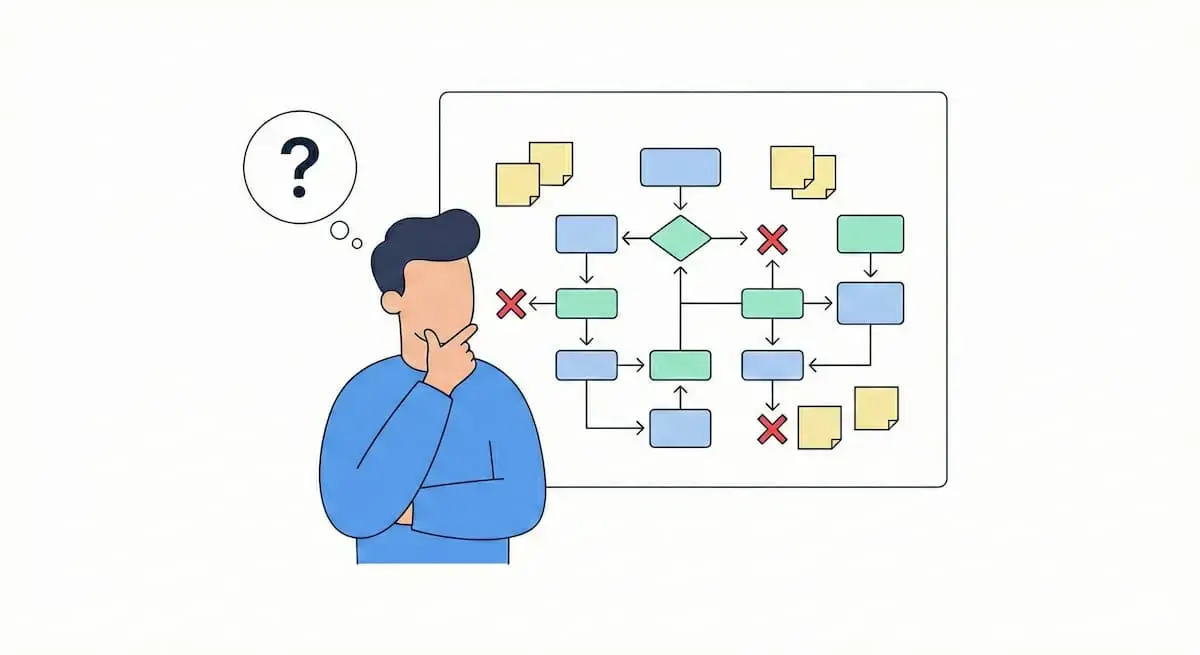
Adopting a new framework can transform the way a product team works and collaborates. Yet this process often comes with its share of challenges when fundamentals are overlooked. A well-chosen framework facilitates decision-making, feature prioritization, and collaboration among team members. Conversely, adopting a model without preparation or thoughtful reflection risks slowing down team dynamics and leading to disappointing results.
Let us explore the main mistakes to avoid in order to get the most out of a framework while sidestepping the classic pitfalls of implementation. These points are drawn from the experience of product teams facing the daily challenges of change management and internal organization.
Lack of vision or clear objectives
Jumping headfirst into a new operational framework without first defining why you want to evolve is counterproductive. Too often, the choice of a methodology is made in reaction to an emergency or as a trend-following exercise. The team then does not really know what is expected of them or where each effort should lead.
This lack of clear vision fuels confusion and blurs internal communication and collaboration. Working without alignment on expectations most often results in a superficial or incomplete application of the framework, which is perceived as a constraint rather than genuine help.
How to define a shared vision and concrete objectives?
Take the time to collectively formalize your ambition before even considering which framework to choose. This process involves all key members, including external stakeholders who will eventually be affected. The clearer the reason for the change, the stronger the collective commitment will be.
Break down this strategic vision into measurable objectives (for example, reducing time-to-market, improving user satisfaction, strengthening cross-team collaboration). This helps everyone understand how their concrete actions fit into the bigger picture.
Which indicators to use for tracking progress?
Regular progress evaluation remains the best way to ensure that framework adoption truly serves your objectives. Select a few accessible metrics and share them with the whole team at regular intervals. Tracking them encourages dialogue and provides early alerts if things go off course.
Additionally, do not hesitate to incorporate qualitative feedback (internal interviews, client feedback) to complement quantitative measurement and adjust ongoing actions as needed.
Choosing an unsuitable or rigid framework
Selecting a method because it has worked elsewhere or benefits from hype exposes you to a common pitfall: ignoring the analysis of needs and context specific to your organization. This lack of fit leads to quick blockages from the very first difficulties encountered.
Rather than adding fluidity, a framework adopted too literally hinders autonomy and plunges the team into mechanical execution devoid of meaning. Business or cultural specificities fall by the wayside, fueling resistance to change among the most engaged team members.
How to adapt the framework to your environment?
Rather than applying a cookie-cutter recipe, organize collaborative workshops to analyze your team's specific needs: project volume, types of stakeholders, digital maturity, history of previous methods... Involve different key functions to cross perspectives and identify the essential adjustments so the new approach integrates naturally.
Then favor a gradual and modular adoption rather than a sudden switch. Test certain aspects on pilot micro-projects and remain open to continuous improvement based on field feedback.
What risks when applying a framework too strictly?
Stubbornly following a method's jargon and tools to the letter quickly diverts attention from operational reality. Teams invest more energy in "doing the framework" than in delivering value to end users. This reflex generates frustration, wasted time, and sometimes disengagement from people who see no point in it.
Excessive rigidity kills collective creativity and undermines the responsiveness needed to address shifting challenges. Methods should serve missions, not the other way around. Adapt each practice while preserving the underlying spirit.
Insufficient training and support
Often, launching a new methodological framework neglects the essential step of initial training. To save time or convinced that "everything is explained online," leaders minimize educational support.
The result: shared vocabulary is not mastered, routines change without being understood, and everyone interprets the steps in their own way. Lack of serious training and insufficient regular coaching undermine motivation and erode the coherence of the collective effort.
Clear description of expected roles within the framework, for example using the RACI Matrix
Formal assignment of responsibilities for each team member
Setting up bootcamps, short training sessions, peer learning sessions
Hands-on coaching from management or internal champions
Investing in skill development, punctuated by regular checkpoints, ensures that everyone can move forward confidently and ask questions without fear. This solid support instills good practices for the long term.
Superficial or incomplete application
Many organizations launch their adoption phase with enthusiasm but give up at the first obstacle. Others implement only the visible elements of the framework without doing the deep work on underlying processes. This partial approach drains the methodology of its substance.
Inadequate planning then weakens the model's integration. Simply copying and pasting rituals is not enough to address the critical points identified during the initial diagnosis. The logic of continuous improvement quickly disappears, and old habits resurface.
Why does stakeholder involvement matter so much?
Effective frameworks require close cooperation between product, technical, and external stakeholder teams from the scoping phase. Neglecting these exchanges means missing the nuanced understanding of the problem and the constraints specific to each function. The result is invariably incomplete and fragile.
Organizing regular reviews with all contributors opens the way to pragmatic adaptation, integrating the field feedback necessary to create real value. This active involvement ensures, in the long run, an evolving and robust process.
How to build a genuine feedback culture?
To move beyond surface-level application, schedule systematic experience sharing moments regardless of hierarchy. Value the reporting of irritants, even minor ones, and encourage systematic documentation of learnings. Such a routine anchors the method in daily life and accelerates the spread of good habits.
A feedback culture also offers a unique opportunity to regularly reassess the relevance of each framework step and decide, as a team, which improvements to test for further progress.
Inadequate change management
Many still underestimate the emotional dimension attached to any transformation of practices. Resistance to change is strongly expressed when expected benefits seem vague or when a feeling of helplessness sets in facing organizational complexity.
Poorly prepared change management results in internal tensions, slower buy-in, and a climate that is harmful to productivity. Weak signals (delays, silence, disengagement) accumulate and durably impact collective dynamics.
How to anticipate and support the transformation?
It all starts with an honest mapping of potential obstacles: strong habits, operational risks, individual fears, etc. Set up open listening channels during the first months and empower ambassadors who can relay the purpose of the change to their peers.
Place transparency at the heart of interactions and communicate continuously about both progress and difficulties encountered. Every win, even a modest one, deserves to be highlighted to encourage collective momentum and build lasting trust.
What strategies to maintain engagement?
Avoiding fatigue means pacing the adoption with unifying events: interim reviews, participatory retrospectives, symbolic rewards... The more the group feels that its voice matters, the more it will invest. Remember to regularly adjust the roadmap to incorporate lessons learned along the way.
Genuine buy-in cannot be decreed: it is built patiently, through small daily gestures, active listening, and experiments adjusted to real-world conditions. Adopting a new framework requires patience and rigor, but also flexibility and empathy, to establish a positive and lasting dynamic.