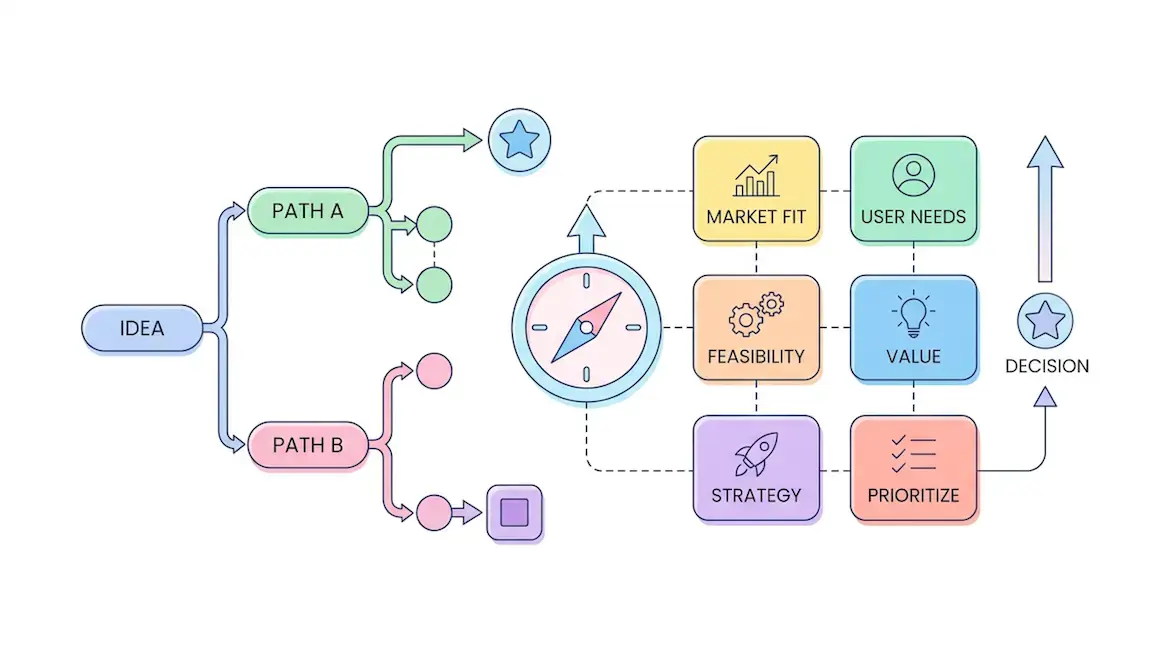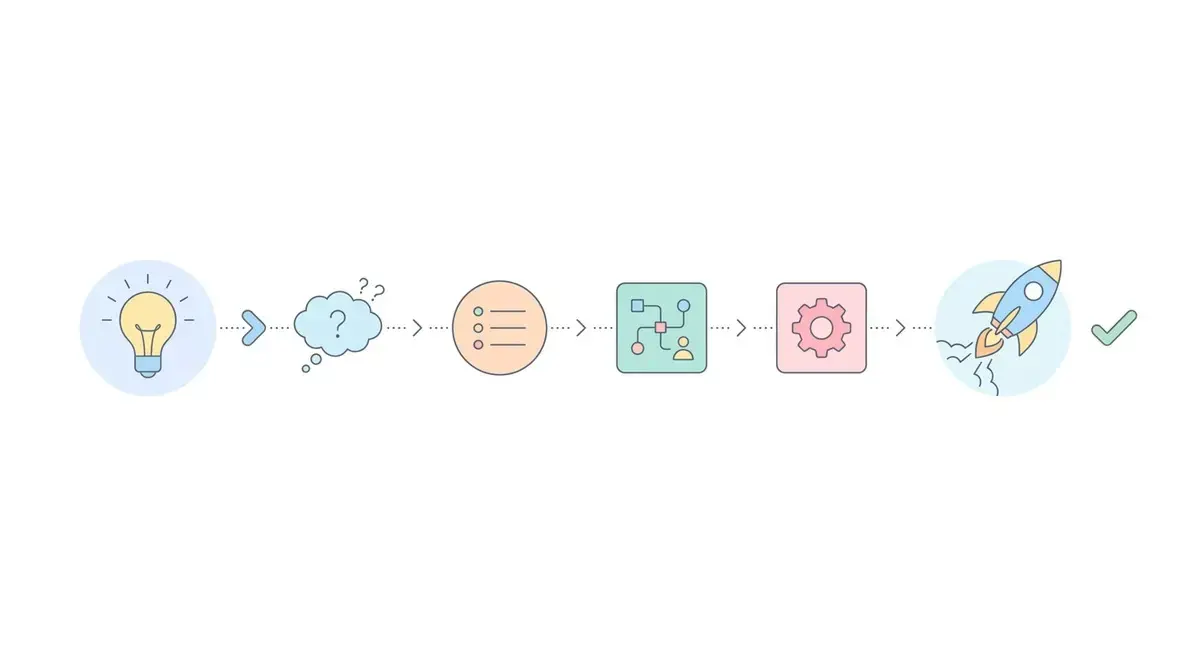
Getting started in product management can quickly feel overwhelming. Between the exploration phase and execution, each step requires method, adapted tools, and effective team collaboration to gain impact. Even though prioritization frameworks and product discovery methods abound, knowing which ones to favor and how to combine them often makes the difference between a stalled project and a roadmap/plan that actually moves forward.
Understanding the beginner product manager's needs
A beginner product manager primarily seeks to structure their approach, clarify their product vision, and organize their decision-making processes. The complexity of the challenges and the variety of available methods naturally complicate this step.
Product manager skills are built through experience, but certain frameworks accelerate their development. They guide thinking about product strategy (much like the GUCCI Framework for market-oriented decisions), secure team collaboration, facilitate information sharing, and help filter out noise to focus on what matters most.
Explore: laying the groundwork with product discovery
Exploration is the phase during which the team identifies, analyzes, and ranks problems or opportunities in the market. Without structured product discovery, many projects scatter and quickly lose relevance compared to real user expectations.
Several approaches exist, each with its own value depending on context and team maturity. Choosing the right tool saves time while clarifying product strategy from the very first collaborative workshops.
Why adopt a clear method for discovery?
Most teams confuse validating an idea with genuine field exploration. Implementing frameworks like user interviews or the well-known Opportunity Solution Tree creates a dynamic where every decision is grounded in concrete data rather than gut feeling.
Using these product management tools helps reduce unnecessary back-and-forth. These techniques structure interviews, bring more focus when mapping problems, and facilitate prioritization before development phases. Involving team collaboration from this stage significantly limits risks tied to hasty assumptions.
Some framework examples for exploration
Certain models specifically guide research, insight synthesis, and topic scoping. Adopting a simple structure from the start avoids losing sight of the business purpose while maintaining real agility.
Opportunity Solution Tree: highlights the connections between strategic objectives, detected opportunities, and envisioned solutions.
Jobs-to-be-Done: centers the reflection on real underlying needs rather than just apparent behaviors.
Lean Canvas: quickly and visually synthesizes all key hypotheses related to the product on a single shared canvas, ideal for project kick-offs.
These formats encourage rapid experimentation and continuous questioning, two fundamental pillars of modern product management.
Prioritize actions with the right frameworks
Once opportunity areas are identified, sorting which features to tackle first becomes more delicate. Prioritization frameworks offer a rational lens to place efforts and resources where they will create the most value.
Used well, these tools prevent falling into the "everything is urgent" trap or the "one-time favorite" pitfall. Their effectiveness depends as much on their simplicity as on the quality of dialogue within the team and with stakeholders.
RICE scoring, MoSCoW, Value vs Effort: which approach to choose?
RICE scoring evaluates each feature across four main criteria: reach (impact), impact, confidence (confidence in success), and effort (estimated workload). This system produces a final score allowing more objective ranking of each proposal on the roadmap/plan.
MoSCoW distinguishes what is imperative, desirable, optional, or unrealistic in the short term. This matrix is easy to use in workshops, facilitates collective discussion, and helps align the team's product vision with business expectations. At a higher level, looking at the "value versus effort" ratio comes down to quickly arbitrating between delivery speed and expected return on investment.
The Value vs Effort matrix offers the most immediate reading: each initiative is positioned based on the value it brings to users and the effort required to deliver it. Quick wins (high value, low effort) naturally rise to the top of the list, while high-effort, low-value items are set aside. This tool is particularly useful for making quick decisions during a workshop, without needing precise quantitative data: a team consensus is enough to place each topic on the grid and move forward.
When to use prioritization frameworks?
As soon as a constant flow of feature suggestions arrives, whether from customer feedback, user tests, or internal brainstorms, it becomes essential to rationalize and centralize decision-making. Using these ready-made grids significantly accelerates the process.
By integrating these references into a team's routine (weekly meetings, end-of-sprint reviews...), you avoid the immediacy bias and gradually build a true product strategy driven by value.
Structure execution to ensure delivery quality
Moving from planning to the delivery phase requires organization, clarity, and rigorous follow-up to avoid diluting collective effort. Frameworks at this stage provide a structure to prevent information loss and meet deadlines without sacrificing quality.
The execution phase, far from being "just operational," remains critical for validating the coherence of upstream choices. It also quickly reveals any blind spots left during product discovery.
What methods for orchestrating execution?
Adopting agile methods (Scrum, sprints) changes how project cycles are organized and ensures a constant feedback loop. Grouping tasks into short sprints, defining clear objectives for each cycle, and fostering transparency are key levers for smoothing team collaboration.
Using dedicated product management tools to track progress (roadmap, backlog, Kanban views) modernizes synchronization among team members. Everyone quickly sees where the project stands, what dependencies exist, and what trade-offs remain to be made.
To go further in structuring product planning, GIST Planning offers an adaptive framework that replaces traditional roadmaps with four levels (Goals, Ideas, Steps, Tasks), facilitating continuous experimentation and strategic alignment.
Integrating Value Stream Mapping into the delivery phase
Value Stream Mapping helps identify all friction points or latency in the delivery chain of a feature. Visualizing each step, from idea to customer, highlights bottlenecks and opens the door to process improvement.
This systematic approach fosters both operational efficiency and continuous learning around the overall product strategy. No need to wait for major crises to adjust collective routines; improvement becomes part of the daily workflow.
Synthesize and share learnings for growth
Over iterations, capitalizing on lessons learned from different frameworks durably strengthens product manager skills. Documenting these best practices, successes and mistakes alike, encourages experience sharing within the team and broader product circles.
How to organize and share these resources?
Saving canvases, scoring tables, and workshop summaries in a shared space ensures easy retrieval of useful tools for future sessions. This makes onboarding new team members much smoother.
Creating an internal framework repository promotes team member autonomy and limits the lost-document syndrome buried in emails or instant messages. Structuring this space by category (exploration, planning, execution) facilitates quick search based on the situation at hand.
Developing a culture of continuous feedback
Encouraging feedback loops after each project cycle installs a climate conducive to constructive self-reflection. Reviewing the strengths and areas for improvement of applied frameworks creates a long-term improvement process.
Pushing team collaboration beyond simple weekly meetings, through open sharing rituals, ensures that product strategy evolves with the challenges encountered and enables regular alignment on the shared product vision.