Artificial intelligence is no longer a mere science-fiction concept. Today, with the advent of generative AI, machine learning tools are becoming foundational technologies at the heart of the products we use every day. But how do you go from a powerful algorithm to a product that users love?
If you work in product development, hold on tight: the AI era is transforming the rules of the game, and particularly the role of the Product Manager (PM).
The new face of the Product Manager (AI PM)
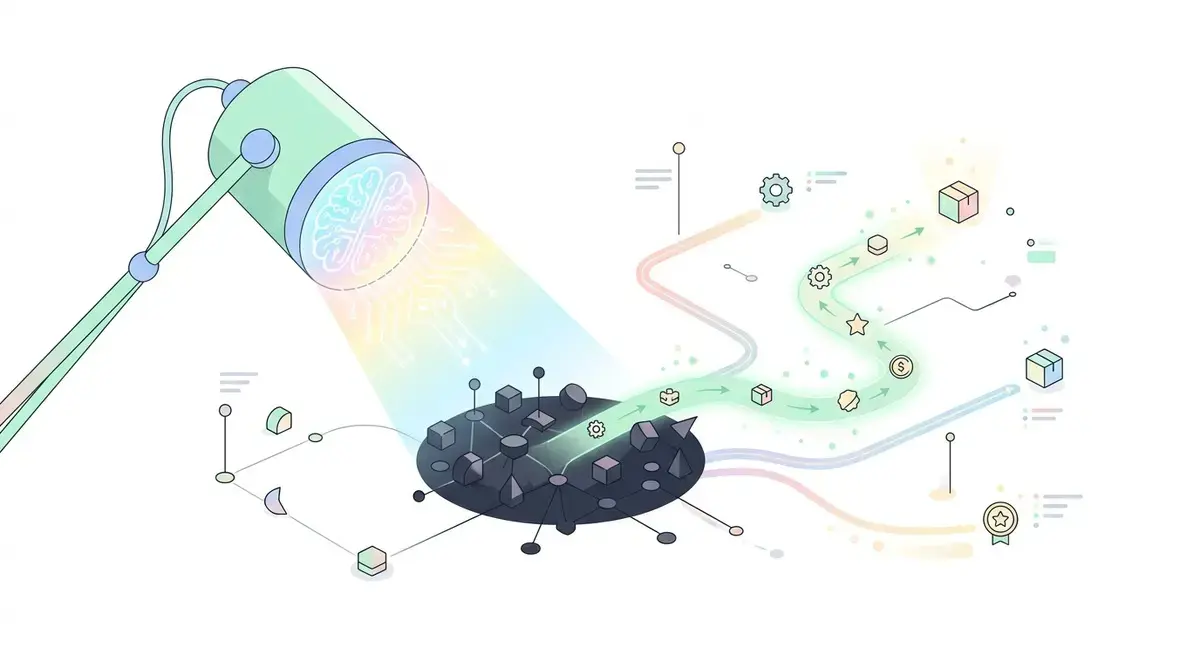
Traditionally, a PM analyzes market trends to identify a problem and build a solution. In the AI world, the approach is often reversed: AI PMs frequently start with an innovative artificial intelligence technology in hand and then set out to find its ideal market application.
This paradigm shift demands new skills. The modern AI PM no longer simply oversees development; they need a solid understanding of data science and machine learning, while cultivating an experimental mindset. They collaborate closely with engineers to integrate AI directly into the user experience.
AI is not just a feature, it IS the product
A common mistake is treating AI as a simple tool. In reality, true AI products deliver a complete, tailor-made user experience. However, technical prowess alone isn't enough: the absolute key to success lies in product-market fit.
History has proven this. Revolutionary technologies have failed due to lack of market fit: think of the Jibo home robot, held back by its price and limited features compared to competitors, or the first Google Glass, rejected over privacy concerns and a lack of practical applications. Conversely, products like Tesla's Autopilot, Netflix recommendations, or even Meta's recent smart glasses (which sold 300,000 units in 5 months) prove that well-integrated AI can win over the masses.
The AI Product Development Lifecycle (AIPDL) in 5 steps
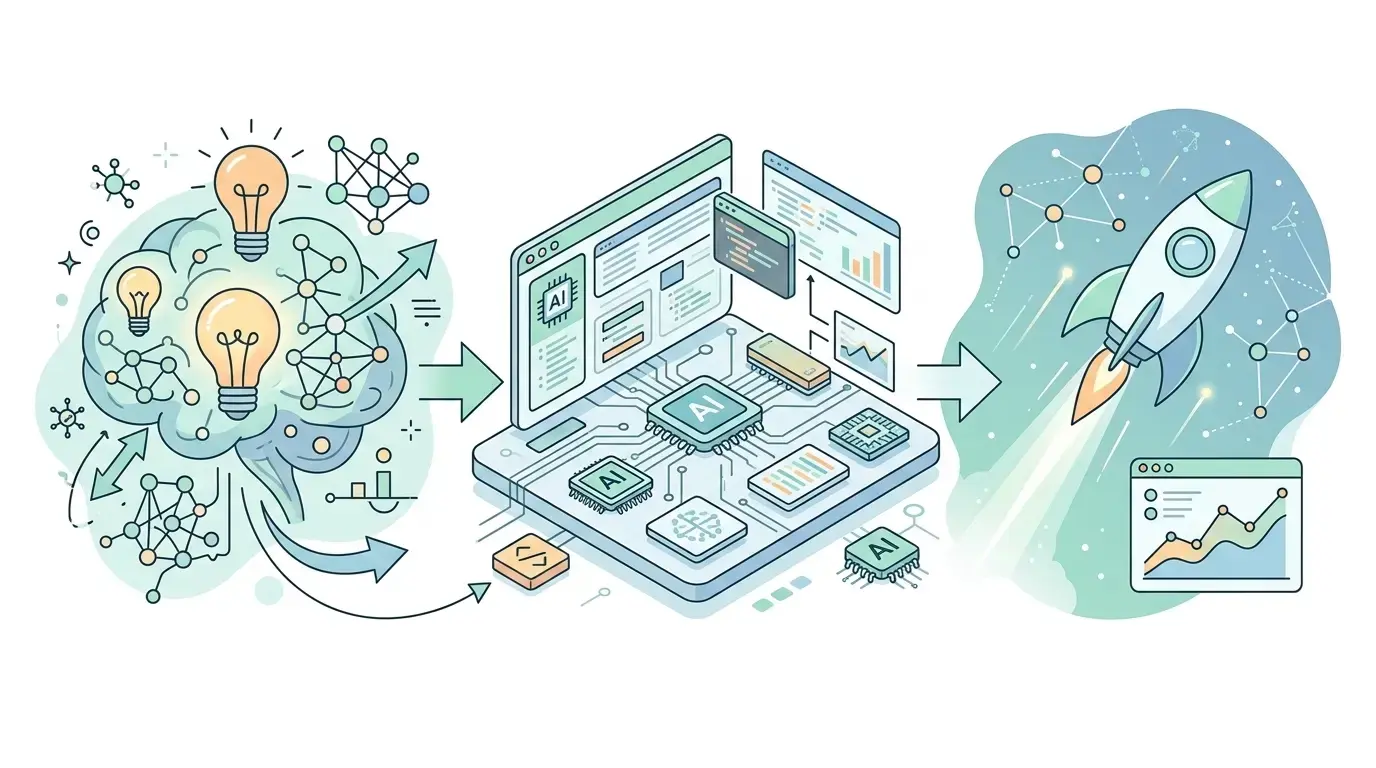
To navigate these complex waters, teams rely on an AI-specific development cycle, the AIPDL (AI Product Development Lifecycle). Here is how to turn raw technology into commercial success:
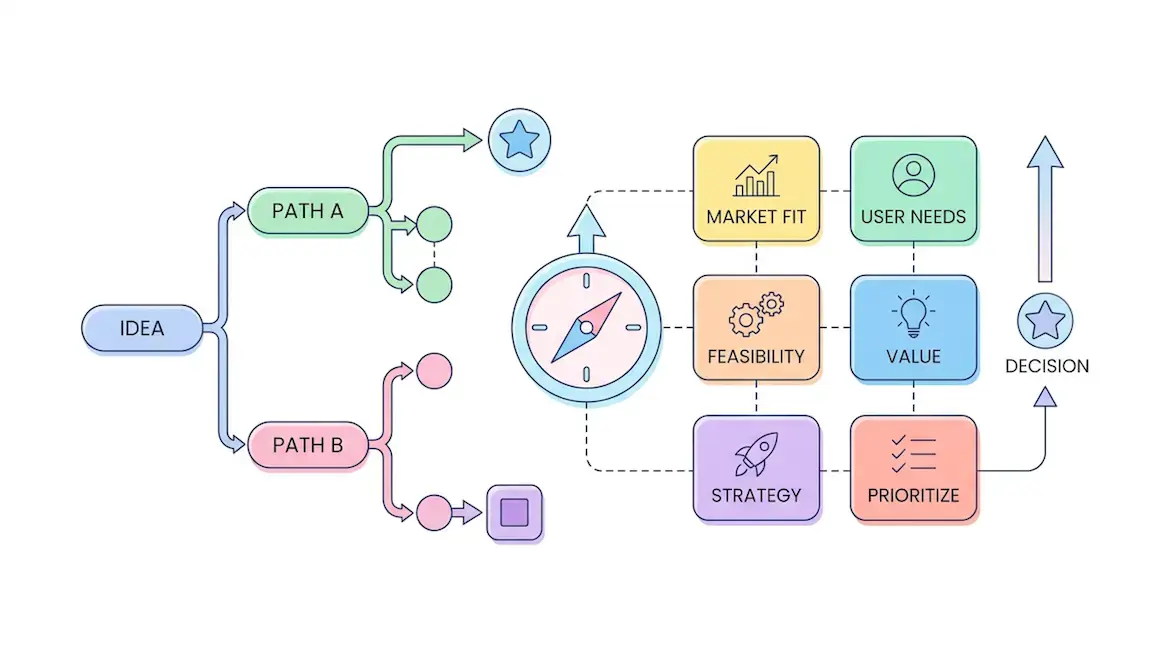
1. Ideation: Finding your target Everything starts with a user-centered approach. The AI PM takes a technology (for example, text-to-image conversion) and formulates hypotheses about target users (content creators, film professionals, etc.) and the specific pain points this technology can solve. This phase requires great flexibility and the ability to pivot quickly based on feedback.
2. Opportunity: Validating the market Before going further, you need to make sure the effort is worthwhile. The team conducts a thorough analysis of market size, competitors, and alternative solutions already used by customers. The goal is to reduce risk and identify an angle where the product will have a genuine competitive advantage.
3. Concept and prototype: Proving the value This is where the idea comes to life by creating an AI Minimum Viable Product (AI MVP) with limited features, but demonstrating the core value of the solution. A product requirements document (PRD) is drafted and shared with researchers and engineers to prepare the prototype for internal testing.
4. Testing and analysis: The moment of truth The product is placed in the hands of real users. The team monitors crucial indicators (metrics) ranging from overall product health to the accuracy, efficiency, and especially fairness of the machine learning model. This iterative process continues until a minimum quality level (MVQ) is reached. At the end of this stage comes the critical Go/No-Go launch decision, based on potential return on investment (ROI) and confirmation of product-market fit.
5. Deployment (Roll-out): The big leap Integrating the AI model into the live ecosystem is a delicate phase. The AI must be able to scale to handle growing data volumes without losing performance. Furthermore, deployment demands absolute rigor regarding ethics, transparency of AI decisions, and user privacy protection. To limit risk, the launch often happens through a restricted beta before a global rollout. Finally, an AI product is never truly "finished": it requires continuous monitoring and regular updates to adapt to new data and market shifts.
In conclusion, succeeding in AI products requires far more than brilliant algorithms. It is a delicate balance between cutting-edge technological innovation, user-centered design, and a relentless pursuit of product-market fit. Ready to build the next product that will transform our daily lives?