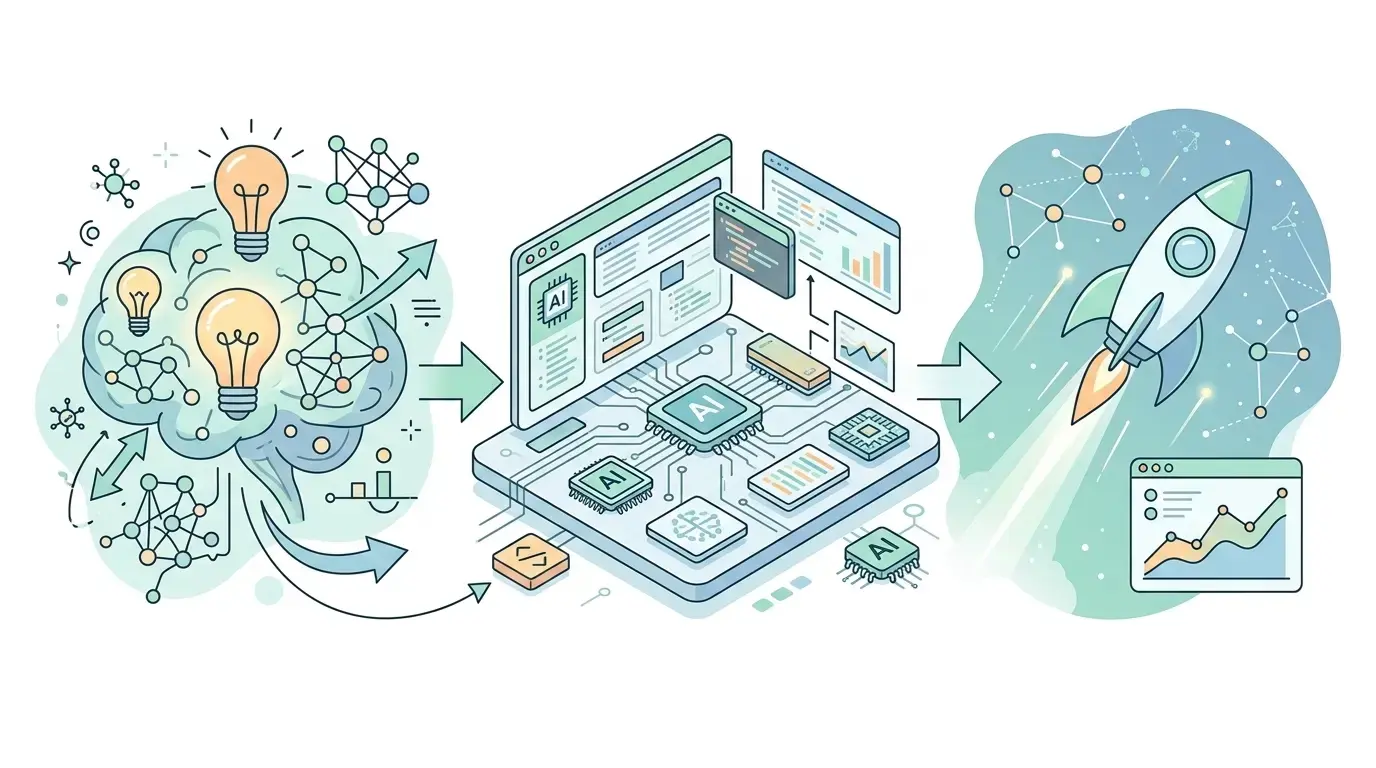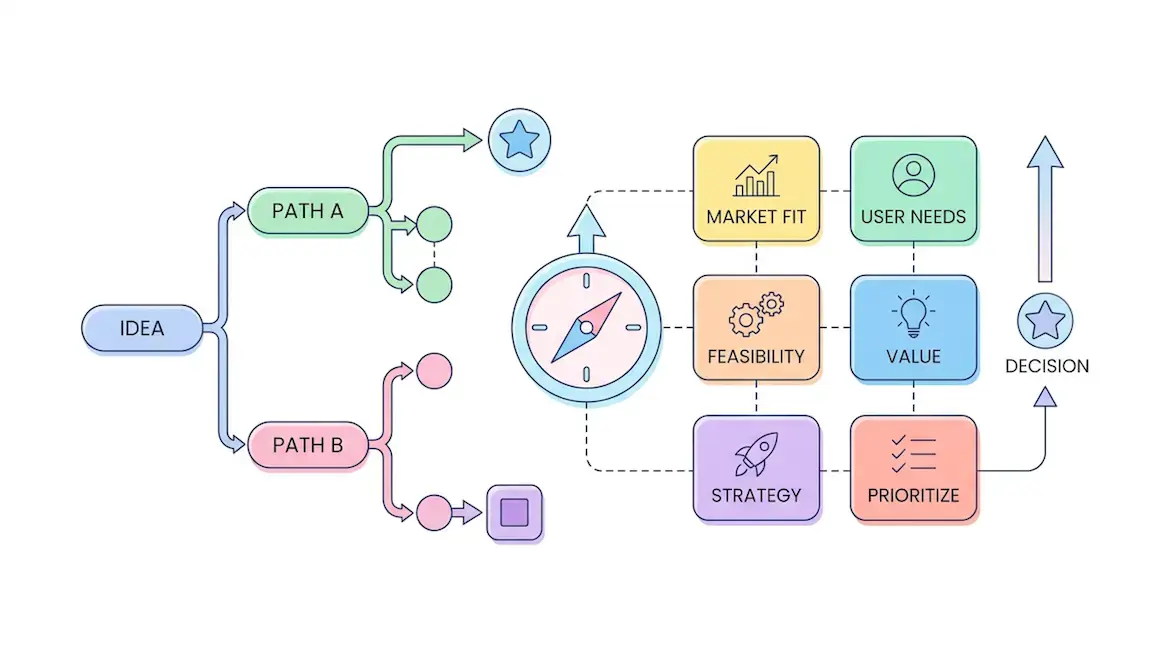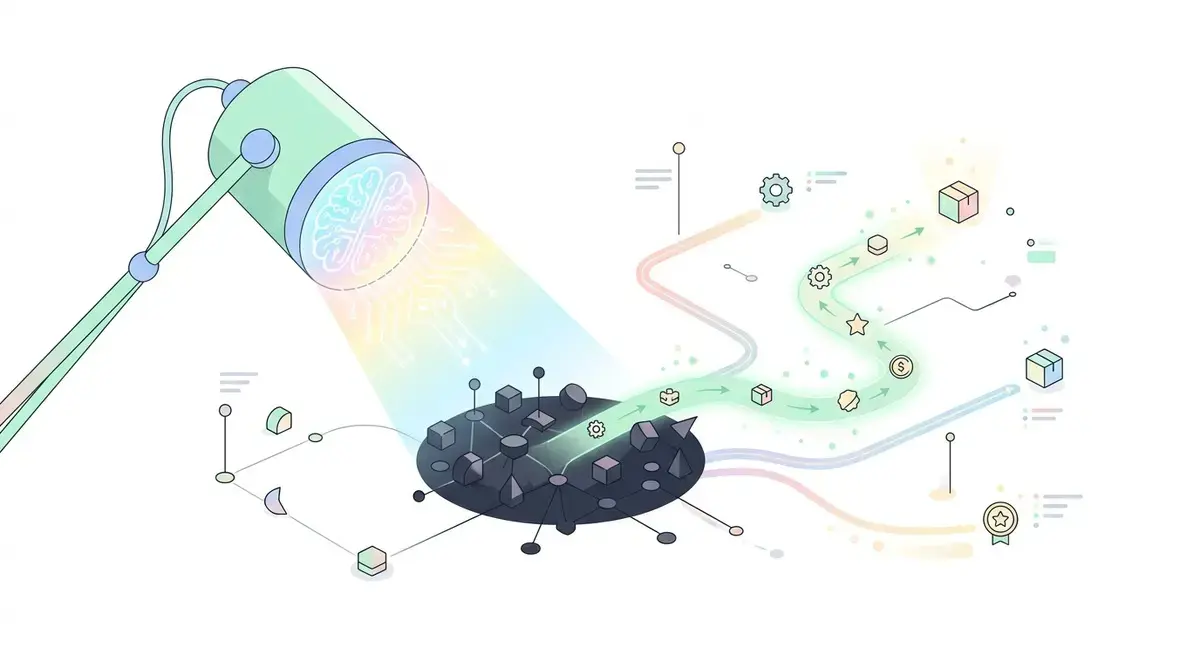
The rise of artificial intelligence is reshaping how product teams approach discovery. Finding, experimenting with, and deploying the right framework has never been more strategic given the growing complexity of markets and the proliferation of digital tools. Yet filtering through a multitude of methodologies remains tedious, especially when the goal is to accelerate product creation while optimizing collaboration around product discovery.
AI-driven framework discovery
Traditional product discovery frameworks rely primarily on human feedback, field experience, or post-hoc analysis. Artificial intelligence transforms this dynamic by automating research, comparative analysis, and even recommending the most relevant framework based on the product team's context.
Using AI as an agent capable of rapidly analyzing your processes, integrating objective prioritization criteria, and delivering personalized summaries establishes a new standard for anyone practicing product discovery. By democratizing access to complex approaches, these AI roles and agents help raise the level of structure in product decisions.
How is AI revolutionizing product discovery?
Artificial intelligence does more than centralize scattered resources or recommend methods. It intervenes from hypothesis formulation all the way to the automated suggestion of the best discovery framework to use at each stage of the product cycle.
The synergy between artificial intelligence and discovery methodology fosters adaptability. Thanks to contextual recommendations, tool selection adjusts more precisely to the complexity of the problem, avoiding selection errors often caused by information overload or a lack of effective filtering.
Automatic detection of unknown needs through semantic analysis integrated into the AI process
Sequencing of key stages with consideration of objectives (exploration, validation, prioritization)
Personalized framework recommendations based on team profile, product maturity, and target market
What are the limits of AI automation in framework selection?
Although artificial intelligence optimizes the overall discovery process, certain strategic trade-offs still require human interpretation. AI excels at sorting, data association, and mechanized prioritization, but its suggestions remain dependent on the quality of the initial inputs. Biases in the starting dataset, or the absence of a nuanced understanding of team culture, can limit discovery framework recommendations, particularly for atypical challenges.
Interpreting weak signals, such as emotional user feedback or diffuse market aspirations, still partially escapes the algorithmic precision of an AI agent. This is why the successful integration of an AI-assisted framework always requires attentive human oversight grounded in domain expertise.
Does AI truly facilitate collaboration around product discovery?
AI-orchestrated automation streamlines communication and knowledge sharing. A framework generated or documented by an AI agent typically includes contextualized explanations, making the process more readable for every member of the product team. This clarity gain fosters collective skill development and accelerates the co-construction of structural choices, especially during phases of intense prioritization.
Another advantage lies in the increased autonomy offered to distributed teams. AI tools readily provide practical guides or narrative scenario examples, reducing dependence on local expertise and limiting the tunnel effect typical of classic discovery cycles.
Toward extreme customization of the product discovery framework
With the widespread adoption of specialized AI roles and agents, the "one size fits all" notion is gradually disappearing from product discovery. Now, each methodology stems from a cross-analysis of business expectations, the precise location of pain points, and the granularity of immediate user feedback.
Frameworks then leverage collected data to generate a dynamic map of the product creation process. This continuous personalization significantly increases the relevance of upstream decisions, whether for identifying opportunities, segmenting users (a task that frameworks like the GUCCI Framework structure across five dimensions), or optimizing As-Is and To-Be workshops.
What new roles are emerging around AI and frameworks?
The acceleration of digital transformation is giving rise to various specialized hybrid profiles. Among them, product ops manage the monitoring of AI-assisted frameworks, while AI agents handle the continuous improvement of discovery by integrating each learning into the collective process.
This partially redefines the internal value chain, as responsibilities shift from pure technical execution toward the governance of knowledge management and automatic prioritization. New agile rituals emerge around iterative evaluation and recalibration of frameworks, enriching the product methodology landscape.
What future for AI-driven discovery?
The rapid evolution of artificial intelligence points toward an ever-deeper integration of adaptive frameworks within product teams. We can anticipate the arrival of platforms capable of proposing modular frameworks in real time, tailored to the current project, drawn from constantly updated repositories.
The objective will remain the same: transforming the discovery process into an agile experimentation space, where the balance between human intervention and algorithmic efficiency continuously shapes the practice of innovative product creation.